Trifluoroacetaldehyde, trifluoroethanal, or fluoral, is a fluorinated derivative of acetaldehyde with the formula CF3CHO. It is a gas at room temperature. Fluoral is used to introduce trifluoromethyl groups into organic compounds. It is highly electrophilic and fluoral forms a hydrate CF3CH(OH)2 upon contact with water like other halogenated acetaldehydes. It is commonly used in form of ethyl hemiacetal (1-ethoxy-2,2,2-trifluoroethanol, CF3CH(OCH2CH3)(OH)) due to the aldehyde's high reactivity, including the tendency to polymerise.
Synthesis and reactions
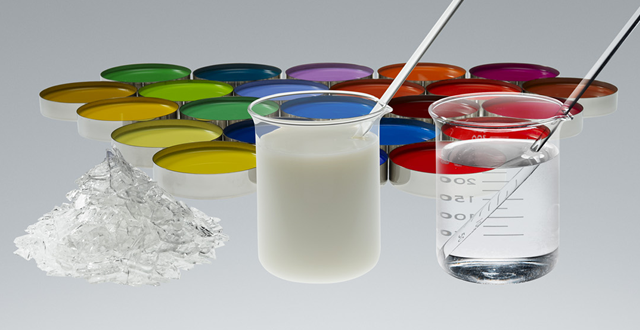
Upon storage, fluoral polymerises into a waxy, white solid that is soluble in diethyl ether and acetone but not water and chlorocarbons. Heating of this polymer gives monomeric fluoral. Fluoral can be prepared from trifluoroacetic acid with lithium aluminium hydride in diethyl ether:
- CF3COOH LiAlH4 → CF3CHO ...
or with concentrated sulfuric acid.
Cathodic reduction of bromotrifluoromethane in dimethylformamide with aluminium as anode gives high yields of fluoral. In this reaction, DMF acts both as the solvent and the formylation agent. Vapour-phase oxidation of trifluoroethanol also gives fluoral.
Photolysis of fluoral gives fluoroform, hexafluoroethane and carbon monoxide, along with some hydrogen.
See also
- Chloral
- Bromal
- Iodal
References