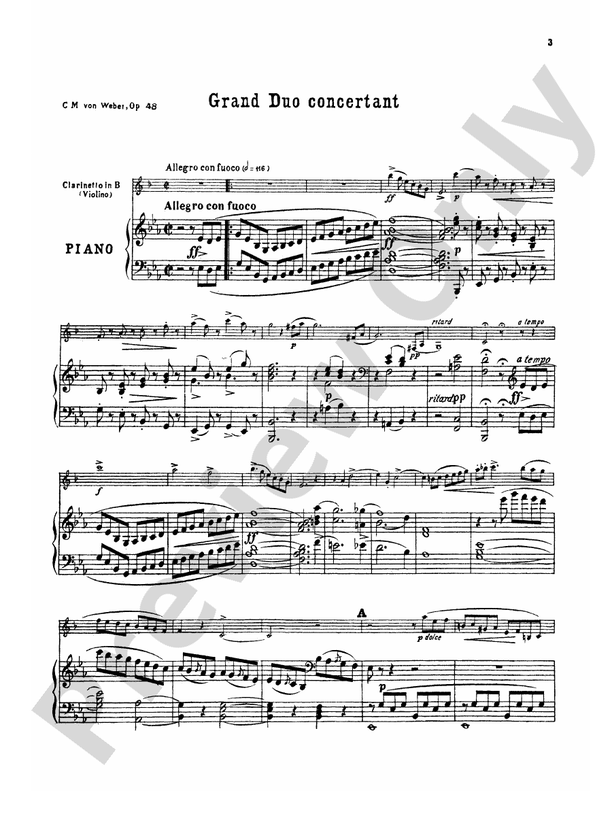
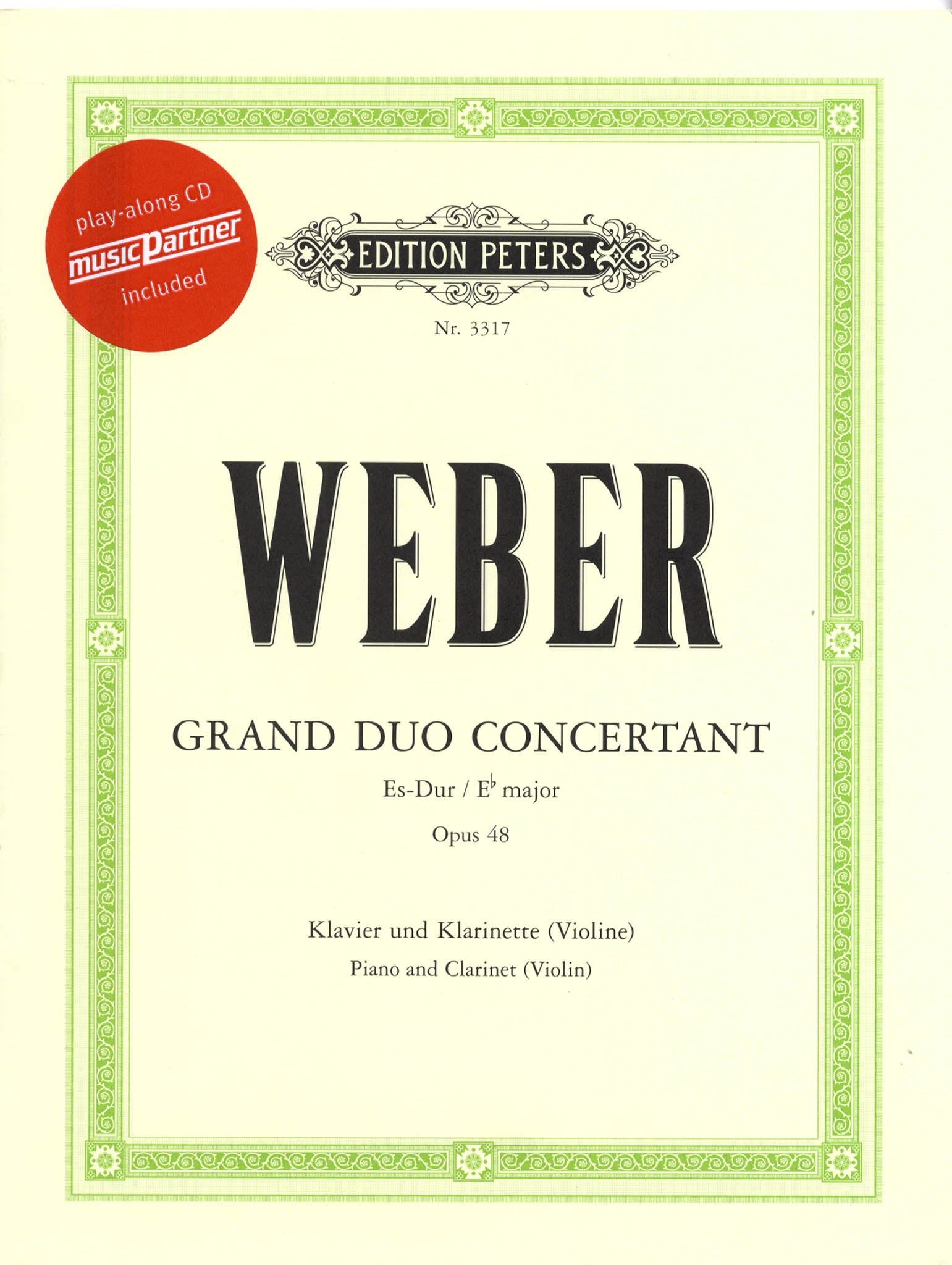
The Grand Duo Concertant, Opus 48, J204, is a three-movement work for clarinet and piano composed by Carl Maria von Weber from 1815 to 1816. It is a virtuosic piece for both instruments. Weber most likely composed the work for himself (on piano) and his friend Heinrich Baermann, a leading clarinettist of the era, although it has also been suggested that the intended clarinettist was Johann Simon Hermstedt.
The three movements are as follows:
- Allegro con fuoco
- Andante con moto
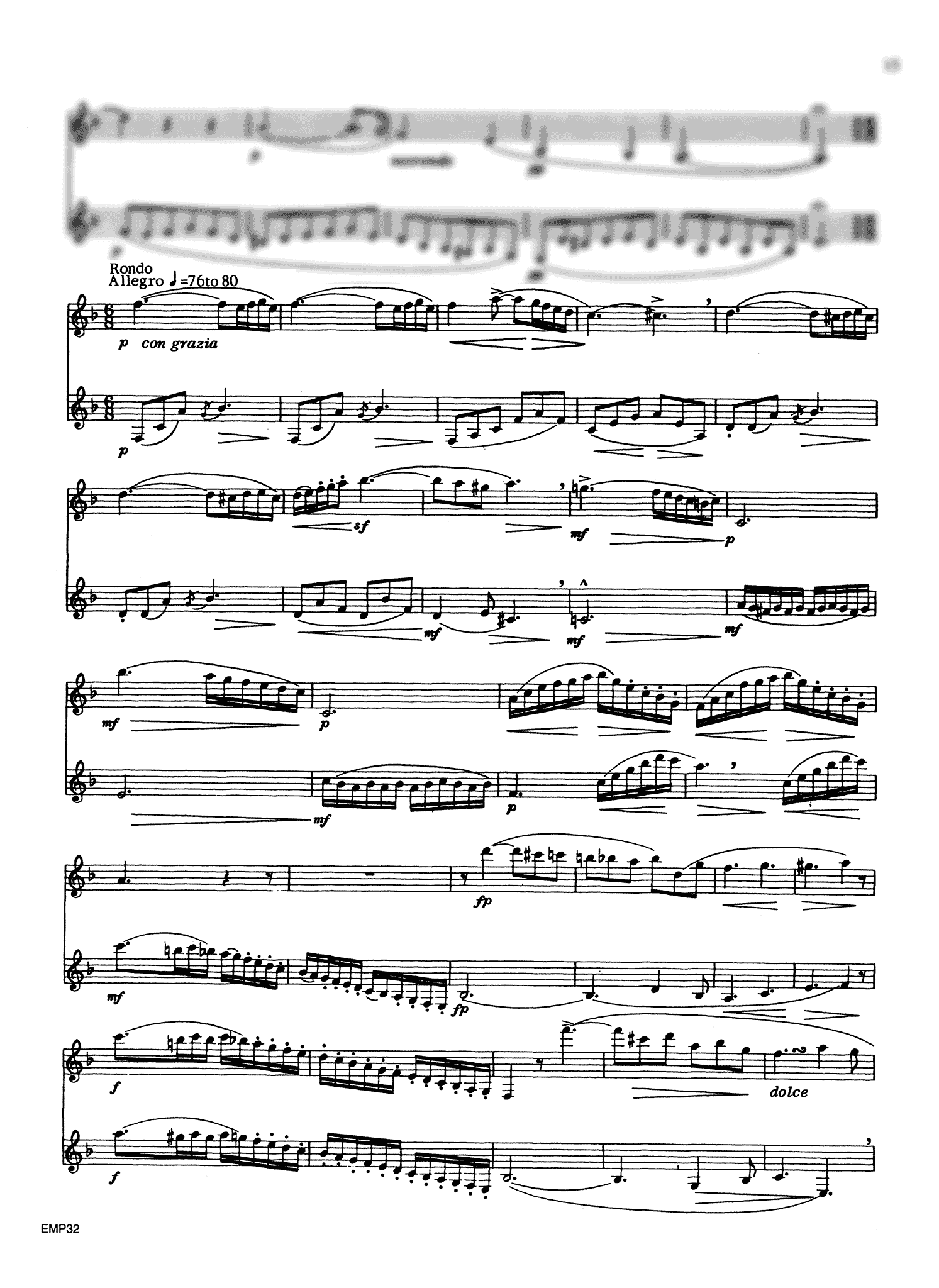
- Rondo: allegro
The second and third movements were completed before the first and were probably performed in 1815 for King Maximilian I Joseph of Bavaria at the Nymphenburg Palace. During its composition, Weber designated the work as a sonata, but abandoned that title upon its completion. This decision reflected the work's character as more of a showcase for two virtuosos than a conventionally structured and integrated work. The first movement is in sonata form, the second movement is an Andante in C minor, and the finale is a lilting rondo in E-flat major. The British music critic John Warrack suggests the work could be referred to as a "double concerto without orchestra", reflecting the highly virtuosic roles for both performers.
The autograph manuscript of the work is preserved in the Library of Congress.
Media
References
Recordings
Etcetera Records, Roeland Hendrikx Ensemble, C.M. von Weber (Grand Quintetto op.34, Grand Duo Concertant op.48, Variations on a theme of Silvana op.33) (2017)
External links
- Grand Duo Concertant, Op. 48. Webers' autograph in the Library of Congress
- Grand Duo Concertant, Op. 48: Scores at the International Music Score Library Project