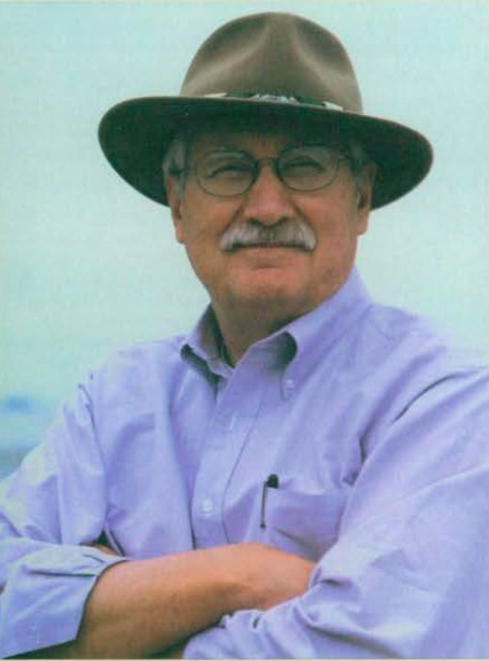
Jerry F. Franklin (born October 27, 1936) is an American forest ecologist and academic widely regarded as the "father of new forestry." He has made significant contributions to sustainable forest management and the study of old-growth forests. Franklin is Professor Emeritus of Ecosystem Management at the University of Washington and has played a key role in integrating ecological principles into forestry practices.
Early Life and Education
Jerry Forest Franklin was born in Waldport, Oregon, on October 27, 1936. By the age of nine, he decided to pursue a career in forestry after discovering his love for forests. He earned both his Bachelor's and Master's degrees in Forest Management from Oregon State University and completed his Ph.D. in Botany and Soils at Washington State University in 1966.
Academic Career
Franklin began his career as a research forester for the USDA Forest Service in 1959. He worked at the Pacific Northwest Research Station in Corvallis, Oregon, where he challenged traditional clear-cutting practices and developed science-based logging solutions. His "new forestry" strategy emphasized leaving logs, wood debris, standing dead trees, and some larger live trees during logging to preserve ecosystem integrity.
In the early 1970s, Franklin co-authored Natural Vegetation of Oregon and Washington, which became a standard ecological reference for forests in the Pacific Northwest. He later served as Director of Ecosystem Science at the National Science Foundation (NSF), where he encouraged ecosystem studies in Pacific Northwest forests.
In 1986, Franklin joined the faculty at the University of Washington as Professor of Ecosystem Analysis. He also directed the Wind River Canopy Crane Research Facility starting in 1993.
Contributions to Forestry
Franklin is best known for pioneering "new forestry," which integrates ecological principles into forest management practices. His work has challenged traditional clear-cutting methods and promoted sustainable approaches that balance ecological and economic objectives. His research on old-growth forests revealed their vital role in supporting biodiversity and ecosystem health.
Franklin was instrumental in developing the Northwest Forest Plan during the early 1990s. This landmark policy protected millions of acres of old-growth forests across Washington, Oregon, and California while addressing controversies surrounding endangered species like the northern spotted owl.
Publications
Franklin has authored over 400 scientific articles, books, book chapters, and technical reports. Notable works include:
- Natural Vegetation of Oregon and Washington (1973)
- Contributions to the Northwest Forest Plan
- Research on old-growth forest ecosystems
His publications have been cited over 32,000 times globally.
Awards and Honors
Franklin has received numerous accolades for his contributions to forestry and ecology:
- Heinz Award for the Environment (2005)
- LaRoe Award for lifetime contributions to conservation biology (2004)
- Honorary Doctorate of Science from Lakehead University (2006)
- Leadership in Action Award from International Association for Landscape Ecology (2001)
Legacy
Jerry F. Franklin's work has transformed forest management practices worldwide by integrating ecological principles into sustainable forestry. His "new forestry" approach continues to influence policies and practices globally while inspiring generations of forest scientists.
References