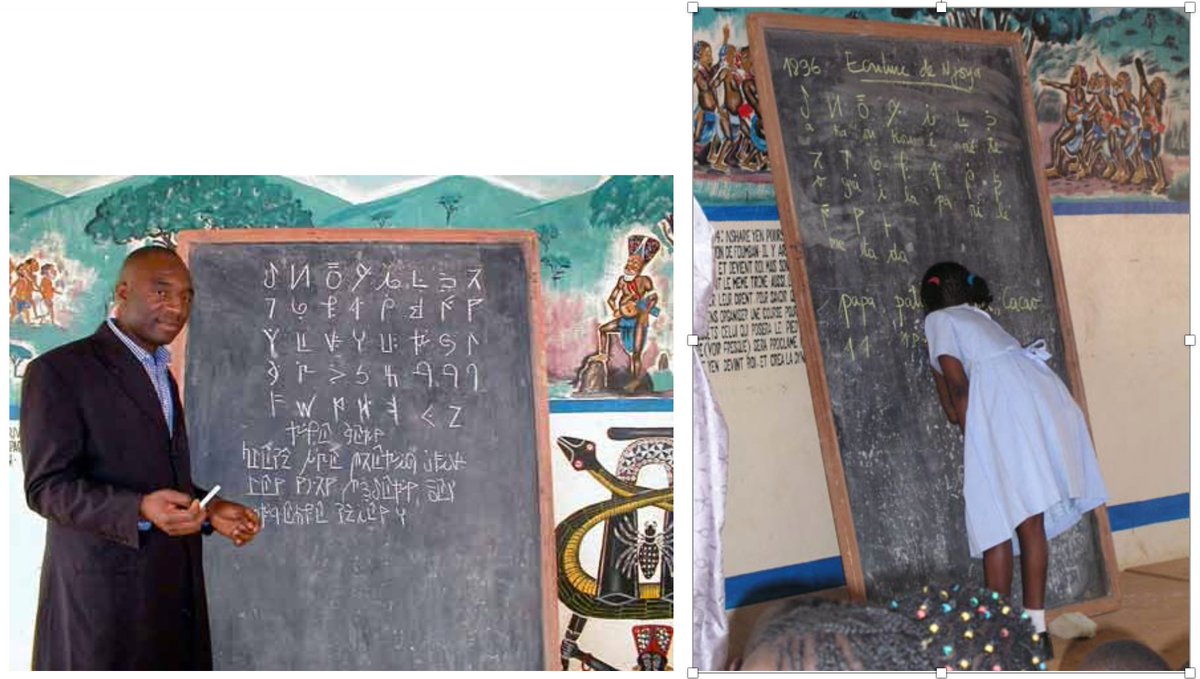
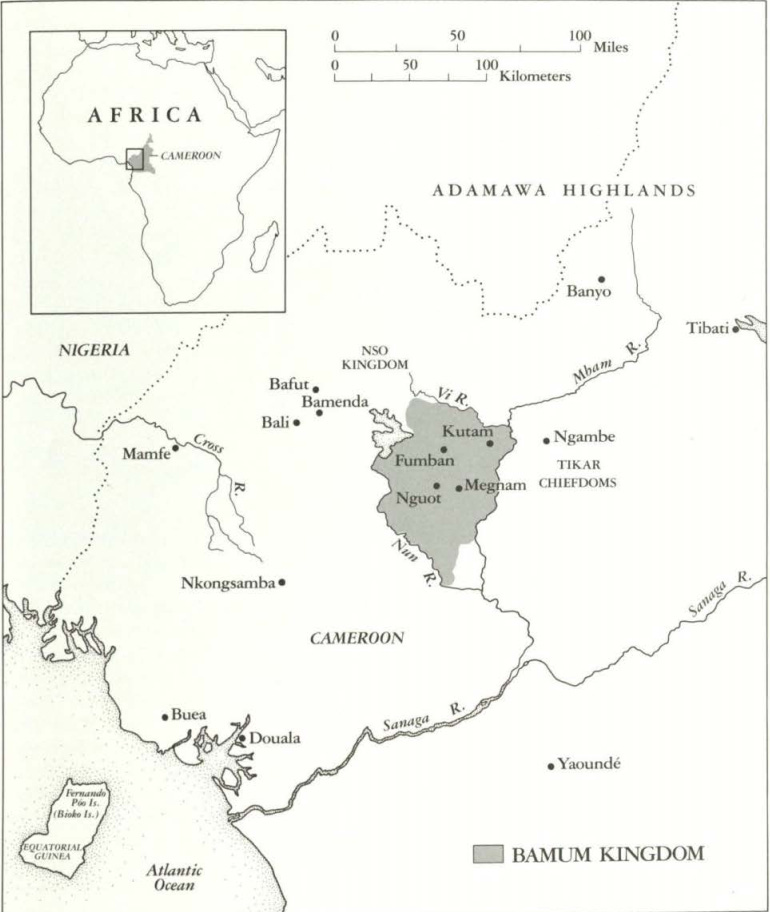
Bamum (Shü Pamom [ʃŷpǎˑmə̀m] 'language of the Bamum', or Shümom 'Mum language'), also known as Shupamem, Bamun, or Bamoun, is an Eastern Grassfields language of Cameroon, with approximately 420,000 speakers. The language is well known for its original script developed by King Njoya and his palace circle in the Kingdom of Bamum around 1895. Cameroonian musician Claude Ndam was a native speaker of the language and sang it in his music.
Phonology
Bamum has tone, vowel length, diphthongs and coda consonants.
Vowels
Nchare claims ten monophthongs, only eight of which (excluding /ɔ/ and /o/) have a length distinction. Matateyou shows short and long examples of all ten vowel qualities. The orthography in angle brackets is based on the General Alphabet of Cameroon Languages as used by Matateyou.
Consonants
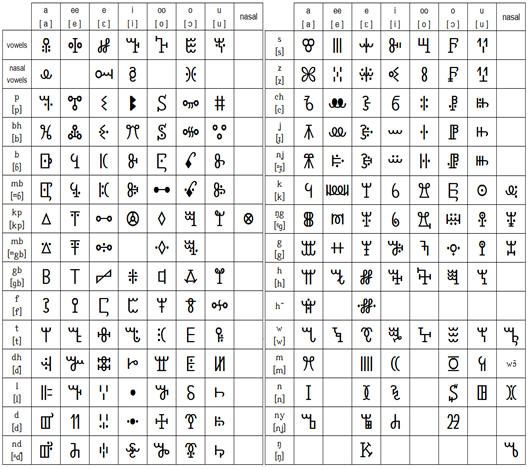
The consonants are displayed as following:
Tones
Bamum has four or five tones. Mateteyou's analysis includes a mid tone, while Nchare's analysis includes downstep. Bamum distinguishes between lexical and grammatical tone.
References
Bibliography
- Matateyou, Emmanuel (2002). Parlons Bamoun. Paris: L'Harmattan. p. 38.
- Nchare, Abdoulaye Laziz (2012). The Grammar of Shupamem (PhD dissertation). New York University. ProQuest 996252918.
- Pawou Molu, Solange (2018). Problèmes de morphophonologie nominale en Bamun-Shüpamom (PhD dissertation). Paris Cité University.
Further reading
- Bamum Scripts and Archives Project; Riley, Charles (2006-01-08). Towards the Encoding of the Bamum Script in the UCS (PDF) (Report).